
The Cost of Waiting: Why Tomorrow Can Be More Expensive Than Today
One of the biggest obstacles to achieving financial security isn't a lack of income or opportunity—it's procrastination. Whether it's delaying retirement savings, putting off debt repayment, postponing insurance coverage, or waiting to create a financial plan, the decision to "do it later" often comes with a hidden price.
Every financial decision has a cost, including the decision to wait. While postponing action may feel harmless today, the long-term financial consequences can be significant. Understanding the cost of waiting can help individuals and families make more informed choices and take meaningful steps toward their financial goals.

The Power of Time in Building Wealth
Time is one of the most valuable assets in personal finance. Thanks to the power of compound growth, money invested today has the opportunity to earn returns, and those returns can generate additional returns over time.
This principle means that even modest, consistent contributions made early can grow substantially over the long term. Conversely, delaying investing—even by just a few years—can result in significantly less accumulated wealth by retirement.
For example, someone who begins investing in their 20s may contribute less overall than someone who starts in their 40s, yet still end up with a larger retirement portfolio simply because their investments had more time to grow.
The lesson is simple: time can be one of your greatest financial allies, but only if you use it.

Delaying Retirement Planning Can Be Costly
Many people assume they'll have plenty of time to prepare for retirement. However, life often becomes busier with career changes, family responsibilities, and unexpected expenses.
Waiting to start retirement planning may require:
Saving substantially more each month to reach the same goal.
Working longer before retiring.
Accepting a lower standard of living during retirement.
Taking on greater investment risk to make up for lost time.
Starting early provides flexibility and allows individuals to adjust their financial strategy as their circumstances evolve.

The Cost of Waiting to Manage Debt
Debt can become more expensive the longer it remains unpaid, particularly high-interest debt such as credit cards.
Interest charges continue to accumulate, increasing the total amount repaid over time. By addressing debt sooner rather than later, borrowers may reduce overall interest costs and free up cash flow for other financial goals.
Creating a repayment plan, prioritizing high-interest balances, and maintaining consistent payments can help improve long-term financial health.

Waiting to Protect Your Family
Financial protection isn't only about preparing for retirement—it also involves protecting loved ones from unexpected events.
Insurance can help provide financial stability during challenging times, but coverage is generally easiest to obtain before major health changes occur. Waiting until after a serious illness or unexpected life event may result in higher premiums, reduced coverage options, or difficulty qualifying for certain policies.
Reviewing your insurance needs periodically can help ensure your family's financial foundation remains strong as life changes.
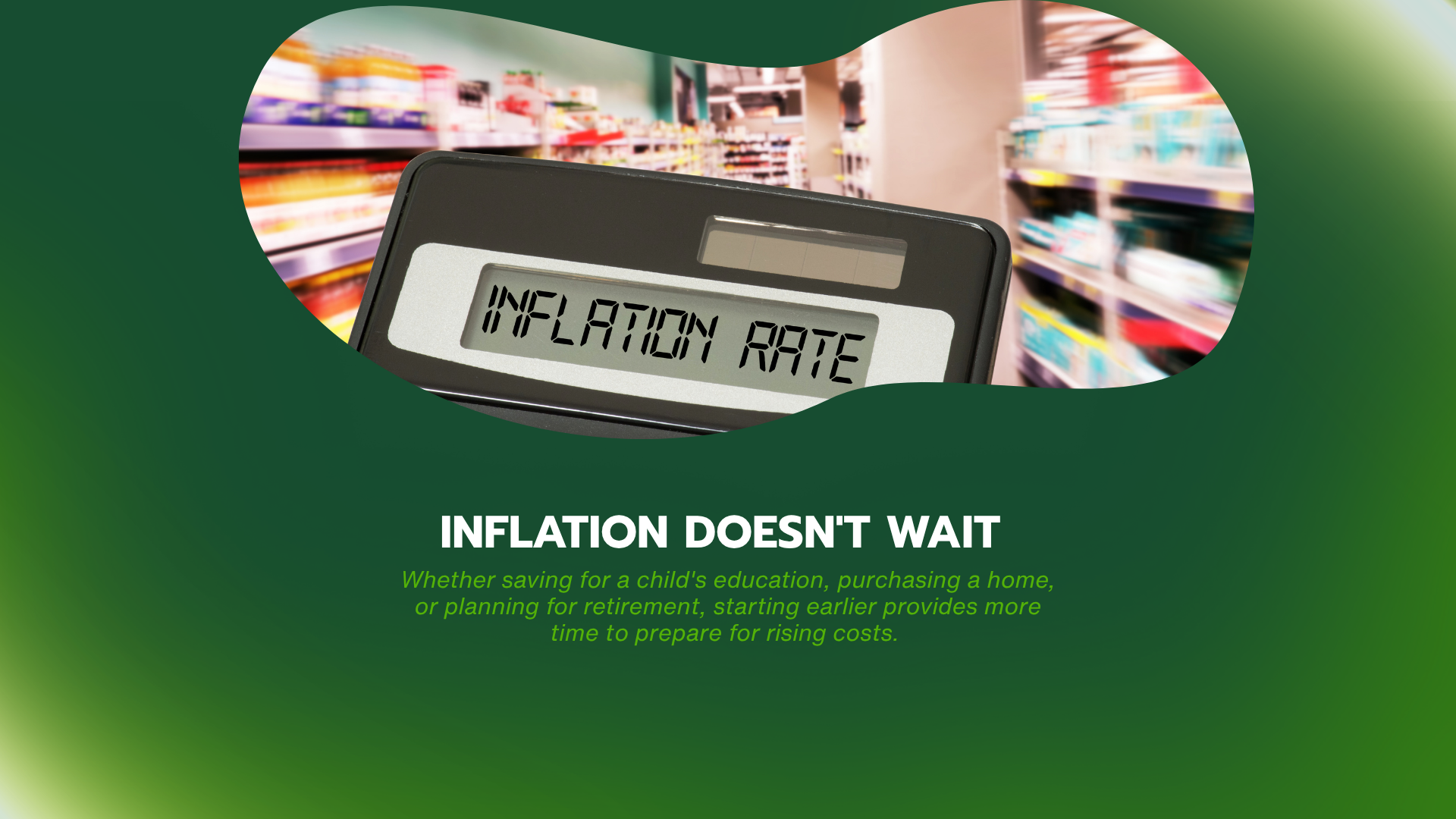
Inflation Doesn't Wait
Another reason not to delay financial planning is inflation.
Over time, the cost of everyday goods and services tends to increase, reducing the purchasing power of money. A financial goal that seems achievable today may require significantly more savings in the future simply because prices have risen.
Whether saving for a child's education, purchasing a home, or planning for retirement, starting earlier provides more time to prepare for rising costs.

Small Steps Today Can Lead to Big Results
Taking action doesn't necessarily require making dramatic financial changes overnight.
Small, consistent actions can make a meaningful difference over time, such as:
Setting up automatic monthly savings.
Increasing retirement contributions when possible.
Reviewing your budget regularly.
Paying more than the minimum on outstanding debt.
Reviewing insurance and beneficiary designations annually.
Meeting with a qualified financial professional to discuss your goals.
Financial progress is often built through consistency rather than perfection.

The Best Time to Start Is Now
It's easy to believe there will always be a better time to begin planning. But waiting for the "perfect moment" often means losing valuable time that can never be recovered.
While no one can predict the future, taking thoughtful financial action today can help create greater flexibility, confidence, and peace of mind tomorrow.
The cost of waiting isn't always visible immediately—but over months, years, and decades, it can become one of the most expensive financial decisions a person makes.
The good news is that it's never too late to begin. Whether you're starting your first savings account, preparing for retirement, managing debt, or reviewing your family's financial protection, the most important step is taking action today.
References
U.S. Securities and Exchange Commission. (n.d.). Compound Interest Calculator and Investor Education. https://www.investor.gov
Investor.gov. (U.S. Securities and Exchange Commission). The Power of Compound Interest. https://www.investor.gov/financial-tools-calculators/calculators/compound-interest-calculator
Consumer Financial Protection Bureau. (n.d.). Budgeting and Saving. https://www.consumerfinance.gov/consumer-tools/budgeting/
Federal Reserve Bank of St. Louis. (n.d.). Inflation and Purchasing Power. https://www.stlouisfed.org
FINRA Investor Education Foundation. (n.d.). Personal Finance and Retirement Planning Resources. https://www.finra.org/investors
