
Preparing for Life Insurance Awareness Month: Is Your Financial Protection Up to Date?
September is Life Insurance Awareness Month, making it an ideal time to pause and ask an important financial question: If something happened to me tomorrow, would the people who depend on me be financially protected?
Life insurance is more than a policy or a monthly premium. It is a financial tool designed to help protect the people, responsibilities, and goals that matter most when income is no longer available.
Yet many Americans still have questions about whether they have enough coverage, what type of policy they need, and whether their existing protection still fits their current financial situation.
Recent research from LIMRA and Life Happens shows that life insurance ownership remains around half of American adults, while millions more recognize that they either need coverage or need additional coverage. The 2026 Insurance Barometer Study reports that 52% of adults say they have life insurance, while another 29% say they don't have coverage but recognize they need it, and 9% say they have coverage but need more. Together, that represents approximately 99 million adults who could benefit from additional coverage or protection.
That makes Life Insurance Awareness Month more than a reminder to purchase insurance. It is also an opportunity to review, understand, and update your financial protection.

Why Reviewing Your Life Insurance Matters
Life rarely stays the same.
A policy that was appropriate several years ago may no longer provide the same level of protection today. Your income may have changed. You may have purchased a home, started a business, welcomed children, taken on new debts, or begun planning for retirement.
The National Association of Insurance Commissioners (NAIC) recommends considering factors such as household income, financial dependents, debts, education expenses, final expenses, and long-term financial goals when determining how much life insurance may be appropriate.
In other words, the right amount of coverage is not necessarily a number you determine once and never revisit.
Consider reviewing your coverage if you have experienced:
A marriage or divorce
The birth or adoption of a child
A significant increase or decrease in income
A new mortgage or other major debt
A change in employment or benefits
Starting or expanding a business
A change in financial responsibilities
Children reaching important educational milestones
A change in retirement plans
The death of a beneficiary
A significant change in your overall financial goals
The NAIC specifically identifies major life events—including marriage, divorce, the birth of a child, a new mortgage, or a new job—as situations that may warrant reviewing your life insurance needs.

The Life Insurance Coverage Checkup
Life Insurance Awareness Month can be used as an annual financial "checkup." Here are several areas worth reviewing.
1. Do You Know How Much Coverage You Have?
Start by gathering your current policy information.
Review:
The death benefit
Policy type
Premium amount
Premium payment schedule
Policy expiration or maturity provisions
Beneficiaries
Policy ownership
Available cash value, if applicable
Any riders or additional benefits
Outstanding policy loans, if applicable
If you have coverage through your employer, include that information in your review as well.
Employer-sponsored life insurance can be valuable, but it is important to understand exactly how much coverage it provides and what happens to the coverage if you leave the company.

2. Is Your Coverage Enough for Your Current Responsibilities?
There is no universal amount of life insurance that is appropriate for everyone.
Instead of simply asking, "How much insurance should I have?" consider asking:
What financial responsibilities would my family have if my income suddenly disappeared?
These may include:
Mortgage or rent
Personal loans
Credit card balances
Funeral and final expenses
Everyday living expenses
Childcare
Education costs
Medical or other outstanding expenses
Business obligations
Retirement needs for a surviving spouse
Other financial commitments
Life Happens notes that life insurance can potentially help address immediate expenses, ongoing household expenses, and future financial goals such as education and retirement.
The goal isn't simply to purchase the largest policy possible. The goal is to develop a level of protection that is appropriate for your circumstances and financial objectives.

3. Don't Assume Your Old Policy Still Fits
One common mistake is purchasing life insurance and then never reviewing it again.
Imagine someone purchased a policy when they were single and had no children. Years later, they are married, have children, own a home, and have significantly increased their income.
Their financial responsibilities have changed—but their policy may not have.
The reverse can also happen. Someone may have fewer financial obligations later in life because a mortgage has been paid down, children have become financially independent, or retirement has begun.
A policy review can help determine whether existing coverage continues to make sense.
The important point is that your insurance should be reviewed as your financial life changes.

4. Understand the Difference Between Policy Types
Life insurance is not one-size-fits-all.
Generally, life insurance can be divided into two broad categories: term insurance and permanent/cash-value insurance.
Term Life Insurance
Term insurance generally provides coverage for a specified period. It can offer substantial protection for a relatively lower initial premium compared with many permanent policies.
It may be considered by people who want protection during specific financial responsibility periods, such as while raising children or paying a mortgage.
Permanent Life Insurance
Permanent policies, including whole life and universal life, are designed to provide longer-term protection and may include a cash-value component.
However, these policies can be more complex, and premiums, guarantees, cash values, and other policy features vary.
The NAIC recommends understanding which portions of a policy are guaranteed, how policy values may change, and what costs or benefits may apply before purchasing or changing coverage.
The right policy depends on the individual's circumstances, goals, financial situation, and needs.

5. Don't Let Cost Assumptions Stop the Conversation
Cost is one of the most common reasons people delay purchasing life insurance.
But research suggests that consumers frequently overestimate what life insurance costs.
The 2025 LIMRA and Life Happens research found that approximately three-quarters of Americans overestimated the cost of a basic term life insurance policy. Among younger adults, the gap between perceived and actual cost estimates was particularly significant.
The 2026 Life Happens Life Insurance Survey similarly found that 64% of respondents said cost affects whether they look into life insurance, while 55% said learning that life insurance might be easier to obtain than expected would make them more likely to start the process.
This doesn't mean every policy is inexpensive or that everyone will qualify for the same premium.
It does mean that assuming life insurance is unaffordable without exploring your actual options may leave an important financial protection gap unaddressed.

6. Review Your Beneficiaries
Having the right amount of insurance is only part of the equation.
It is also important to review who is listed as the beneficiary of your policy.
Major life events can make an old beneficiary designation outdated.
For example, someone may need to review their beneficiary designations following:
Marriage
Divorce
Remarriage
Birth or adoption of a child
Death of a previously named beneficiary
Changes to an estate or financial plan
Beneficiary rules and estate considerations can be complex, so policyholders should consider discussing their situation with appropriately qualified financial, tax, or legal professionals.

7. Don't Forget About the Protection You Already Have
Before purchasing additional coverage, take inventory of your existing protection.
Your financial protection may come from several sources, including:
Employer-provided life insurance + Individual life insurance + Other financial resources
Understanding the full picture can help you identify where there may be duplication, gaps, or areas that deserve further review.
The 2025 Insurance Barometer data found that 55% of working adults reported having life insurance through their employer, highlighting why workplace coverage should be included when reviewing an overall protection strategy.
However, employer coverage should not automatically be assumed to be sufficient for every individual's long-term needs.

8. Life Insurance Can Be Part of a Larger Financial Strategy
Life insurance should not necessarily be viewed in isolation.
A comprehensive financial review may also consider:
Emergency savings
Retirement planning
Debt management
Disability protection
Long-term care considerations
Estate planning
Education funding
Income replacement
Business continuity
The 2026 Insurance Barometer research shows that consumers increasingly expect life insurance to address a broader range of financial concerns. LIMRA reports that many consumers are interested in features related to retirement income, long-term care, critical illness, and emergency needs.
This highlights an important point: financial protection is not just about preparing for one event. It is about building a strategy that can adapt as life changes.
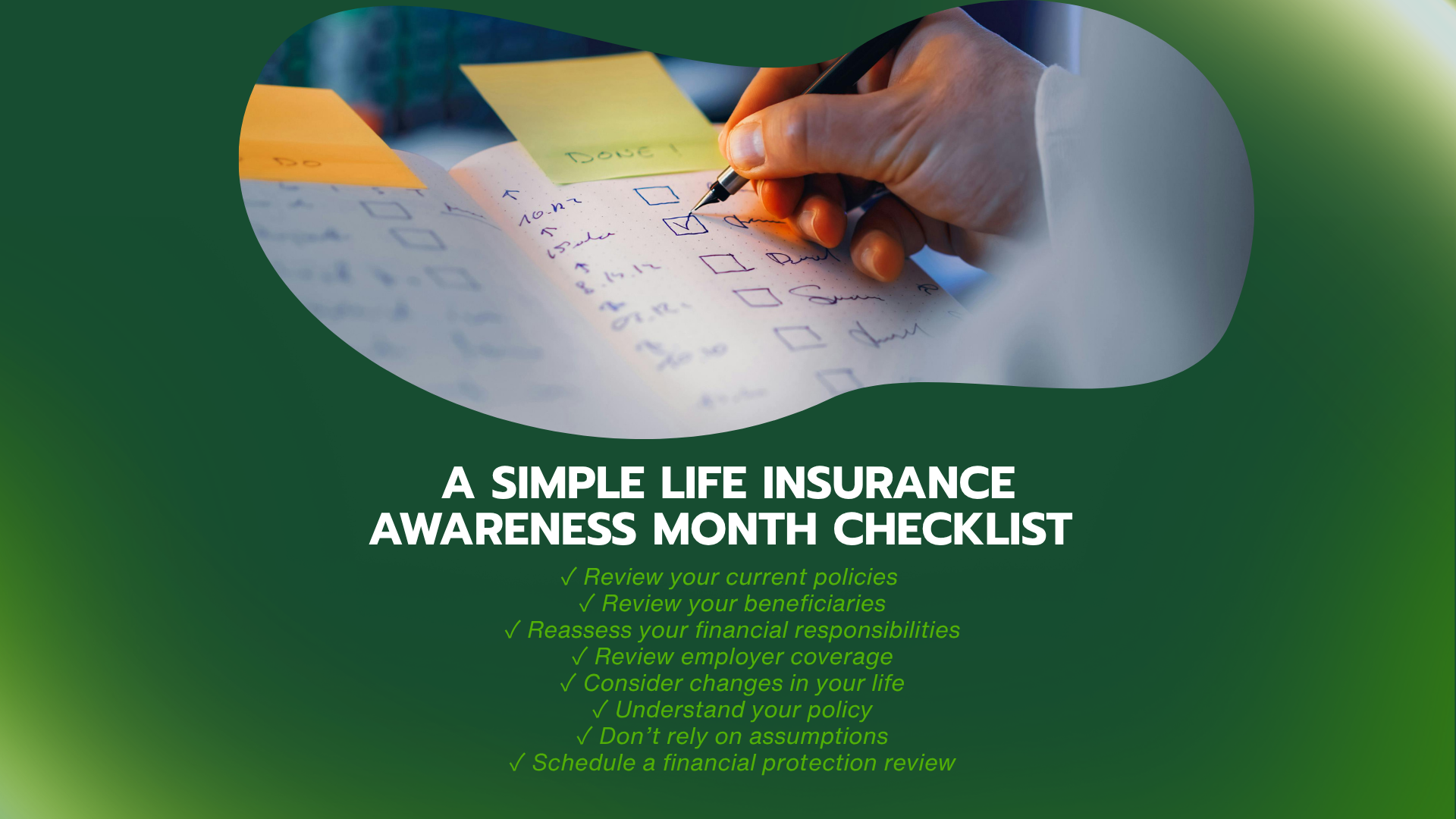
A Simple Life Insurance Awareness Month Checklist
This September, consider taking a few minutes to complete a personal insurance checkup:
✓ Review your current policies
Know what you own and what benefits they provide.
✓ Review your beneficiaries
Make sure your beneficiary designations reflect your current wishes.
✓ Reassess your financial responsibilities
Consider your income, debts, mortgage, children, education goals, and other obligations.
✓ Review employer coverage
Understand how much coverage you have through work and whether it is sufficient for your overall needs.
✓ Consider changes in your life
Marriage, divorce, children, a new home, a new job, business ownership, or retirement can all be reasons to revisit your coverage.
✓ Understand your policy
Ask questions about premiums, guarantees, cash values, riders, exclusions, and other policy provisions.
✓ Don't rely on assumptions
Rather than assuming coverage is too expensive or that you already have enough, get information based on your individual situation.
✓ Schedule a financial protection review
A qualified insurance or financial professional can help you evaluate your needs and understand the options available to you.

Protection Today Can Support Confidence Tomorrow
Life Insurance Awareness Month is not about encouraging people to purchase a policy simply because it is September.
It is about encouraging people to think about the financial consequences of life's unexpected events before they happen.
Research continues to show that many Americans recognize the importance of life insurance but remain uncertain about how much they need, what type of coverage is appropriate, or how much it may cost.
Your financial life is constantly changing. Your insurance protection should be reviewed with that same mindset.
This September, don't just ask, "Do I have life insurance?"
Ask:
"Is my financial protection still aligned with the life I am living today—and the people and goals I want to protect tomorrow?"
That question can be the beginning of a meaningful financial review.
References
Life Happens. (2026, August). Moving life insurance to the top of people’s to-do list.
Life Happens. (2026, June). What consumers want (and need): Education, customization and professional advice.
Life Happens. (2026). Life Insurance 101.
LIMRA. (2026, July 20). 2026 Insurance Barometer Study.
LIMRA. (2026, April 28). Understanding the elusive life insurance consumer.
LIMRA. (2026). Life Insurance Awareness Month 2026.
LIMRA & Life Happens. (2025). 2025 Facts About Life Insurance.
National Association of Insurance Commissioners. (n.d.). Life insurance.
National Association of Insurance Commissioners. (n.d.). Consumer's guide to life insurance.
