
Financial Protection for Women: Planning for the Long Term
In recognition of Women’s History Month
Women today play a powerful role in shaping families, businesses, and communities. From leading organizations to managing households, women are increasingly responsible for financial decision-making. However, despite these advancements, many women still face unique financial challenges that make long-term financial protection especially important.
During Women’s History Month, it is an ideal time to highlight the importance of financial planning and protection strategies that support women throughout every stage of life. Understanding these challenges and planning ahead can help ensure long-term financial stability and security.

Longer Life Expectancy and Retirement Planning
One of the most significant financial considerations for women is longevity. On average, women live longer than men. While this is a positive sign of improved health and quality of life, it also means that women often need their retirement savings and financial resources to last longer.
According to data from the Social Security Administration, women in the United States live approximately five years longer than men on average. This extended lifespan means retirement funds, pensions, and savings must stretch further.
Because of this, women may benefit from planning strategies such as:
Building long-term retirement savings earlier
Considering income-generating financial products
Reviewing life insurance options that support retirement planning
Creating diversified financial plans that protect against unexpected costs
Planning for longevity helps ensure that retirement remains financially secure even decades after leaving the workforce.
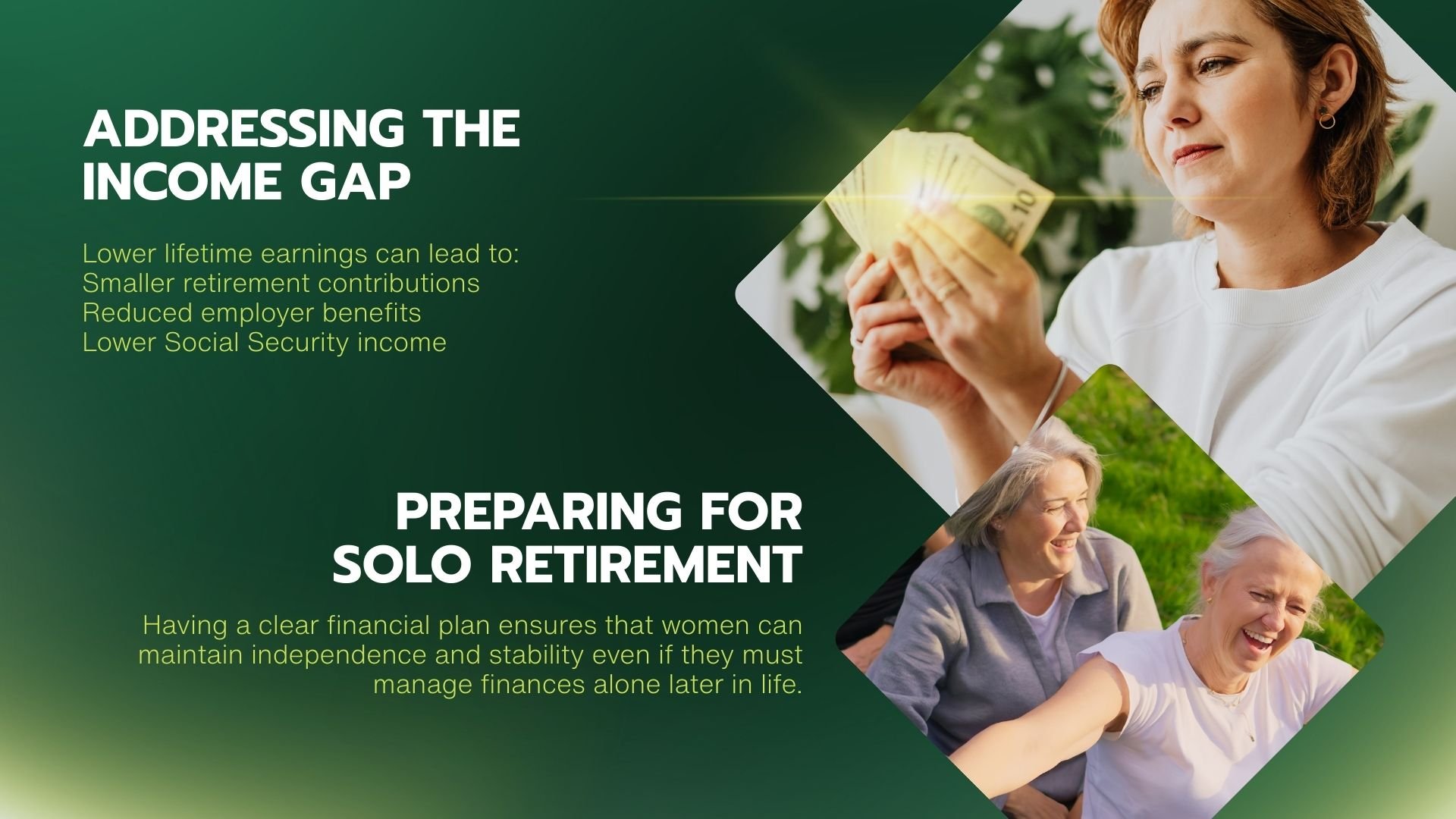
Addressing the Income Gap
Although progress continues to be made, many women still experience wage disparities compared to men. Studies consistently show that women earn less on average over the course of their careers. Over time, these differences can significantly affect retirement savings, Social Security benefits, and long-term financial stability.
Lower lifetime earnings can lead to:
Smaller retirement contributions
Reduced employer benefits
Lower Social Security income
This makes proactive financial planning essential. Strategies such as supplemental retirement accounts, life insurance with living benefits, and consistent long-term savings can help bridge potential income gaps and create stronger financial security.
Preparing for Solo Retirement
Women are also more likely than men to spend part of their retirement years living alone. Whether due to longer life expectancy, divorce, or widowhood, many women eventually become the sole decision-makers responsible for their finances.
Planning for solo retirement means considering:
Long-term healthcare expenses
Income protection strategies
Emergency savings
Estate planning and beneficiary designations
Having a clear financial plan ensures that women can maintain independence and stability even if they must manage finances alone later in life.

Financial Protection for Single Mothers
Single mothers face unique financial responsibilities as they often serve as both the primary caregiver and financial provider for their children. Balancing daily expenses, childcare, education planning, and long-term savings can be challenging.
For single mothers, financial protection planning may include:
Life insurance coverage to protect children’s financial future
Emergency savings funds
Education savings plans
Disability protection or income replacement strategies
These tools help ensure that children remain financially supported even in unexpected circumstances.

Building a Strong Financial Foundation
Financial protection is not just about preparing for emergencies—it is about building confidence and stability for the future. By focusing on long-term strategies such as retirement planning, insurance protection, and disciplined savings, women can create a strong financial foundation that supports themselves and their families.
Women’s History Month is a reminder not only of the incredible achievements of women throughout history but also of the importance of empowering women with financial knowledge and tools for the future.
Taking steps today—no matter how small—can make a meaningful difference in financial security tomorrow.
References
American Association of University Women. (2023). The gender pay gap: Current statistics. https://www.aauw.org
LIMRA. (2022). Women and financial security study. LIMRA Research Institute.
Social Security Administration. (2023). Life expectancy for Social Security. https://www.ssa.gov
U.S. Census Bureau. (2023). Income and poverty in the United States. https://www.census.gov
U.S. Department of Labor. (2022). Women in the labor force: A databook. https://www.dol.gov
